1487
Runagaldr score

German-language death metal steeped in medieval history and folklore, with memorable riffs, distinctive growls and a charmingly direct DIY sound.
I found Abrogation roughly twenty years ago while looking specifically for metal with German lyrics, and 1487 has been a classic in my collection ever since. It is not a revolutionary death metal album, and I do not think it needs to be. What it has instead is a very particular identity: German-language death metal with a melodic streak, medieval history and folklore at its core, and enough personality to make that combination feel like more than a gimmick.
Musically, the foundation is straightforward and very effective. The riffs are strong, often catchy, and the album moves comfortably between slow, mid-paced and fast material with a few blast beats thrown in. The drumming is generally direct, but there are enough interesting parts woven into it to keep the rhythm section from feeling anonymous. The guitars do most of the decorating. There are good solos throughout, sometimes turning into wonderfully messy chromatic runs, and the frequent pinch harmonics have a nasty bite to them in exactly the right way.
Schwarte is a huge part of why the record is so recognizable. Most of the album sits in his low-mid growl, which is unusually understandable for this style, but the important thing is that the voice itself has character. I could identify him almost anywhere. He occasionally drops lower, as on “Erlöser,” while rarer higher screams add contrast elsewhere. “Gotteskrieger” layers very high screams over low growls in the verses, and “Priesterliebe” uses similar background screams sparingly enough that they still stand out. Even the rough clean backing vocals on “Hexenhammer” have a certain charm.
The album is more varied in texture than its very consistent core sound initially suggests. “Hexe im Moor” brings acoustic guitar into the verses and eventually closes with an acoustic solo, giving the song its own shape without making it feel disconnected from the rest of the record. “Walpurgisnacht” also uses acoustic guitars, but with a different atmosphere, and ends the album on them. Those details matter because 1487 otherwise knows exactly what lane it wants to stay in.
The lyrics are one of the biggest reasons the album has stuck with me. The title points directly toward the Malleus Maleficarum, the witch-hunting manual commonly associated with 1486/1487, and the record keeps returning to persecution, superstition, execution, plague, religion, folklore and medieval history. “Bahrrecht” deals with the old belief that a murder victim’s corpse could bleed in the presence of the killer. “Hexe im Moor” follows a deaf-mute girl accused of witchcraft. “Rabenschlacht” draws on a Magdeburg raven-battle legend, which hits a little differently for me as someone from Saxony-Anhalt. If medieval history and German folklore are already your thing, there is a lot here to dig into.
“Erlkönig 2004” is probably the best song on the album because it takes that storytelling instinct further than anything else here. Abrogation do not simply set Goethe’s poem to death metal. The arrangement makes the speakers distinct. The father uses Schwarte’s familiar low growl and sounds reassuring, the child answers with a higher, increasingly panicked scream, and the Erlking sections shift into clean guitars, tapping leads and a genuinely eerie atmosphere. The narrator is comparatively matter-of-fact, so the dialogue remains easy to follow. By the final scream, the song has become genuinely unsettling rather than merely theatrical.
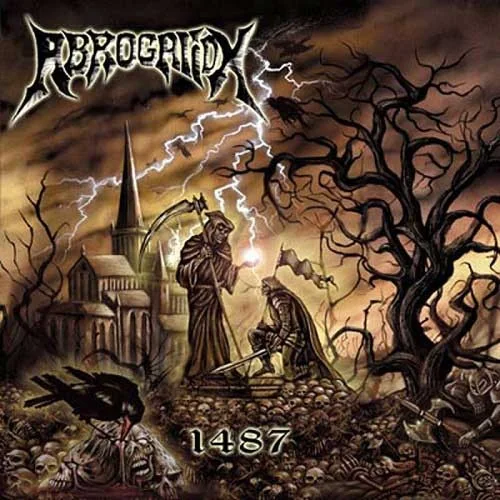
The production fits the record. The drums are a little dry, but otherwise it has a DIY directness I like. There are no obvious layers of studio trickery trying to make the band sound larger than life. It mostly sounds like the band playing death metal, and that honesty suits the material. The cover artwork works for the same reason. It looks exactly as grim, medieval and overstuffed with death, superstition and religious imagery as these lyrics deserve.
There is a downside to all that consistency. A lot of the songs sound similar, and the structures are very predictable. There are no sudden detours into experimental territory, which makes the material memorable and easy to follow but also means the album rarely surprises you. A few more structural risks could have pushed it further. The first couple of minutes are basically a litmus test: if that core sound does not work for you, the remaining forty minutes are unlikely to convert you.
For me, though, the formula works. Twelve songs in about 43 minutes is the perfect dose. 1487 does not overstay its welcome, but it also never feels slight. It is niche, coherent and very good at being exactly what it is: a compact slab of melodic, medieval-minded German death metal with memorable riffs, distinctive vocals and a strong sense of place. 7.5/10.
You might also like
Similar releases based on genres and musical traits.
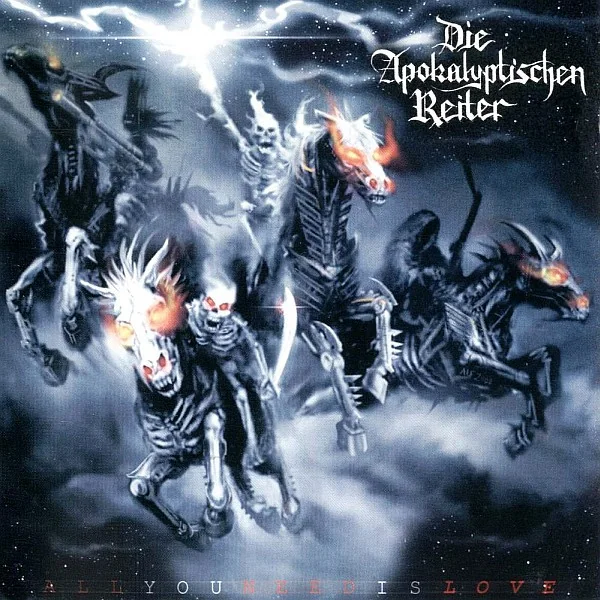
All You Need Is Love
A huge-sounding, brutally melodic breakthrough packed with absurd vocal range, memorable hooks, blast beats, piano and tightly controlled chaos.
The Outlaw
A rough-edged, riff-stuffed collision of melodic death metal, thrash and death 'n' roll that cares far more about hooks and momentum than brutality.
With Gods and Legends Unite
A characterful, mid-tempo dose of early Amon Amarth-style melodeath that delivers the riffs, even if 55 minutes is more than it needs.