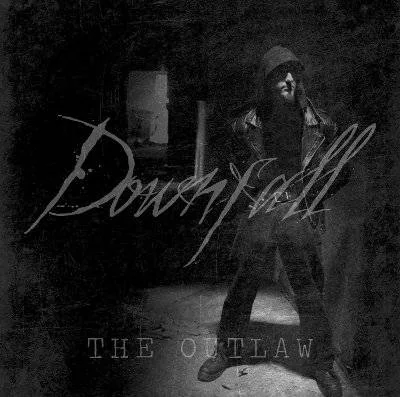
The Outlaw
Runagaldr score

A rough-edged, riff-stuffed collision of melodic death metal, thrash and death 'n' roll that cares far more about hooks and momentum than brutality.
I bought The Outlaw because of one riff. I saw Downfall live once, if memory serves opening for Eisregen, and “Noman’s Land” hit me hard enough that I bought the CD then and there. Years later, that still feels like one of my better impulse buys. This is not a record built around some grand concept or impossible technical ambition. It is a rough, ridiculously fun pile of riffs from Ruhla, Thuringia, and it knows exactly how to make those riffs count.
Calling it melodic death metal is fair, but it does not tell the whole story. The vocals do much of the work anchoring The Outlaw firmly in death metal: a recognizable low growl dominates, with occasional high screams and very little else. Underneath that voice, the guitars often lean heavily into thrash, and the Rock’n’Roll streak becomes impossible to ignore once you start listening for it. Grooves swing, bridge riffs swagger, and little background leads sometimes sound more like straight Rock’n’Roll than extreme metal. By the end, death ‘n’ roll feels less like a passing influence and more like a genuine part of the album’s identity. Black metal, by comparison, is mostly a brief shade that appears around “Peter Nirsch.”
That mixture works because Downfall are far more interested in writing catchy songs than winning a brutality contest. The album is heavy, but rarely abrasive. It keeps moving almost constantly, shifting between fast verses, slower bridges, double-bass choruses and instrumental sections without turning the structures into puzzles. Most songs are built from familiar parts, but the amount of guitar material packed into them keeps those conventional structures alive. There are so many riffs that it can be difficult to keep track of them all.
The two guitars are especially important. Sometimes they harmonize, but just as often the left and right channels are doing genuinely different things. Headphones reward that separation, with melodies, leads and rhythm parts moving independently across the stereo field. The band also knows when to let those instruments carry a section without vocals. The singer is distinctive, but he is not barking over every available second.
The production fits the material. It is clearly DIY, rough around the edges and short on polish, but none of that makes the album difficult to listen to. If anything, cleaning it up too much would probably cost it some personality. The sound has enough clarity for the guitar interplay to register, while still feeling like a self-produced record from a young local band rather than something sanded smooth in a giant studio.
The one-minute “Intro” is hardly essential, but at least it belongs here. Marching snare, guitars, growls and a final high scream lead seamlessly into the title track instead of promising some huge orchestral fantasy the rest of the album has no interest in delivering. It even gains a little purpose later when “Downfall” brings back the line “for love, for hate, for nothing.” “The Outlaw” itself establishes the band’s strengths quickly: fast verses, a mid-tempo chorus, a slower bridge, wild tapping leads and an excellent chromatic bridge riff. “Until It Burns” pushes farther toward thrash, with some riffing and solo phrasing that brings Kill ’Em All-era Metallica to mind. That is a resemblance I hear, not a claim about influence.
“Calling The Predator” is one of my favorites, partly because I still associate that drawn-out chorus with seeing the band live. The refrain hits over double bass, while the rest of the song is slower and a little more intricate than the tracks around it. “Downfall” follows with a groovier death-metal feel and melodic leads, plus another shreddy solo. The solos throughout the album are not exercises in technical wizardry. They are energetic, fun and exactly as complicated as the songs need them to be.
Then comes “Noman’s Land,” the reason I own this record. Unlike most of The Outlaw, it takes a little time to build before dropping what is still my favorite riff on the album. The verses ease back, the chorus picks up with double bass, and then the bridge changes the song again: faster instrumental work, a slower vocal passage, another absurdly catchy riff, and finally a buildup back into the opening idea. Toward the end, Rock’n’Roll leads creep into the background. Of everything here, this is the song that most clearly shows why the death ‘n’ roll tag belongs.
It also makes the transition into “Peter Nirsch” especially effective. The two tracks are back-to-back, flow directly into one another and, amusingly, both run 5:45, yet they feel like opposites. “Noman’s Land” may be the easiest-going, most Rock’n’Roll song on the album; “Peter Nirsch” is probably the densest and most intimidating. A black-metal-flavored opening riff sits under spoken vocals before the pace rises again. Even at its darkest, though, the song remains melodic. The heavier atmosphere fits the subject without turning the track into a completely different band.
The final stretch keeps finding small ways to distinguish itself. “Jigsaw” opens on a drum groove that later returns under the full band, then closes with a growled “game over,” made even more memorable by the German accent. “Cry City” swings hard toward thrash again. “In This Cell” answers with one of the album’s heaviest death-metal openings, then uses a tremolo-picked bridge over double bass before reshaping essentially the same riff into a more rocking variation. That little transformation is Downfall in miniature: the same basic vocabulary can suddenly lean death metal, thrash or Rock’n’Roll depending on how they attack it.
“Lost Alone” is a smart closer because it finally gives the record a little more breathing room. The double bass and heaviness are still there, but they arrive in bursts instead of constant forward pressure. Naturally, there is still another thoroughly Rock’n’Roll bridge riff waiting inside it. Then the song slows down and the album simply ends on a guitar melody rather than reaching for some giant final chord. It is understated and classy.
I do not hear a weak stretch on The Outlaw. That does not make it a masterpiece, and I would not pretend it is some revolutionary death-metal landmark. It is simply a seriously strong record that remains fun from beginning to end. The riffs are plentiful, the songwriting has more personality than its straightforward structures suggest, and the rough production suits it. If you like metal, especially death metal with a strong thrash pulse and a bit of Rock’n’Roll swagger, I see very little reason not to give it a shot.
8/10.