
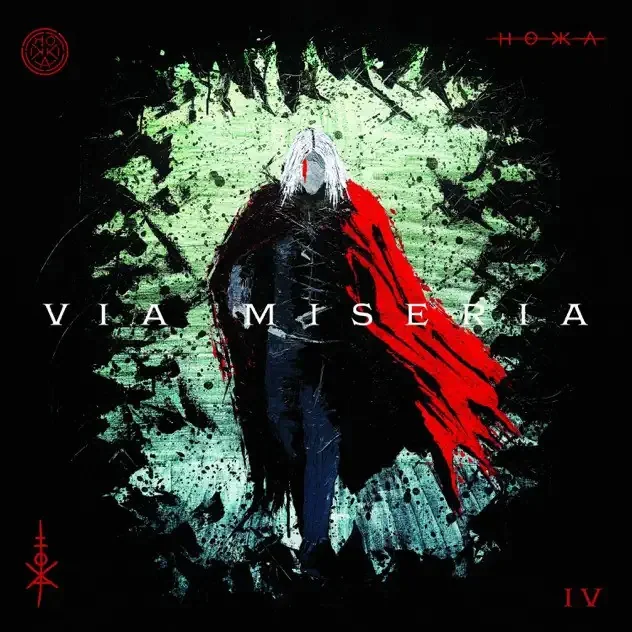
Via Miseria IV
Runagaldr score

A shamelessly catchy Gothic metal and alternative rock debut built on huge vocal hooks, chunky riffs and sleek synth details, even if its pop-song structures rarely stray far from the formula.
No, you did not miss the first three HOKKA albums. Via Miseria IV is their debut. Joel Hokka’s explanation for the “IV” is basically just “Star Wars”: start the saga at Episode IV. Honestly, that is enough explanation for me.
I first heard “In The Darkness” before the album was out, and it hooked me immediately. The stuttering “da-da-da” chorus is so shamelessly catchy that I can absolutely understand why someone would hate it, but I am a complete sucker for this kind of thing. The other singles did nothing to lower my expectations. By the time the album came out, I wanted a physical copy badly enough that I had my parents bring me the CD from Germany when they visited in May, because shipping it to the US was ridiculous.
That catchiness is the entire foundation of Via Miseria IV. Joel Hokka’s vocals are the main attraction, and his melodic instincts are absurdly good. Most of these songs sit around a comfortable mid-tempo pace, with relatively calm verses opening into enormous choruses. The arrangements are usually pretty straightforward, but the melodies are so strong that the repetition rarely bothers me in the moment. The rest of the band understands its role perfectly. Nothing is trying to steal the spotlight from the songs themselves. The guitars are often chunky and huge without being especially heavy, the drums keep everything moving, and the synths add enough personality and texture to stop the record from feeling too plain.
“Blackbird” is HOKKA in miniature. It fades in on synths, immediately drops the first big chunky riff of the album, pulls back into a calmer verse that puts the vocals front and center, and then explodes into a massive chorus. “In The Darkness” works from basically the same blueprint. So does a lot of the album, honestly. HOKKA are not reinventing pop songwriting here. They are just ridiculously good at making the same recipe taste different enough each time.
“Death By Cupid’s Arrow” opens with a pretty piano part before adding synths and vocal effects, then settles back into that calm-verse, huge-chorus structure. It may be the most “aggressive” song here, and those quotation marks are doing heavy lifting, but its bridge does have a genuinely rocking riff. Knowing guitarist Pauli Rantasalmi came from The Rasmus makes perfect sense once you hear how naturally these big, accessible rock parts fit together. The title track has another great guitar moment, built around a stomping riff and an almost whistle-like synth sound that makes it immediately headbangable.
“Heart Said No” goes in the opposite direction. It is just really pretty. Simple power chords sit underneath a beautiful piano part while the vocals do most of the work. Then, for roughly two bars before the bridge, HOKKA suddenly drops a genuinely heavy riff that I love, only to abandon it almost immediately. I wish they had actually gone somewhere with it. Moments like that make me want the band to stretch these songs out a little more and see what happens.
The middle of the album starts bending the formula more. “Bon Apetit” was the first real oddball for me. It took a while to grow on me because it is noticeably weirder than the songs around it, but now that weirdness is part of the appeal. The food-related wordplay is fun, and the drum groove gives it its own character.
Then there is “Murder Ballad (Dying Flame),” which is fantastic. Beautiful piano, vocals right at the center, huge melodies, and enough cheese to supply a dairy farm. If you are lactose intolerant when it comes to your music, HOKKA may not be the band for you. What makes this one especially interesting is the structure. Instead of simply moving between calm verses and a giant chorus, it keeps building from start to finish until the whole thing becomes enormous. With a singer this good, I would happily take more songs like this.
That is also where the album’s sequencing really starts to click for me. Via Miseria IV almost feels structured like a live set. It opens with the immediate bangers, gets stranger in the middle, then starts moving into calmer and more atmospheric territory. “Angels Fall” initially sounds like it might be another ballad because it begins with almost the same kind of note and texture as “Murder Ballad,” but it quickly gets significantly heavier and returns to the album’s usual pop structure. Its long, quiet synth fade-out gives it a more drawn-out ending than most of the record.
“Serpent’s Song” then brings back the energy of the opening stretch. It is another banger, but its bridge drops into an almost doomy riff that gives the song a darker edge. The final minute is even better: wordless vocals drifting across synth pads in different octaves and harmonies until the track slowly fades away. It would be a perfect ending to the album.
Unfortunately, it is not the ending.
“Kiss From A Rose” is not bad. I did not even know it was a Seal cover the first time I heard it, but something about it immediately felt off, like the songwriting simply did not belong to HOKKA. I do not know the original particularly well and do not care much for it, so I am not interested in comparing versions. As a HOKKA performance, this one is perfectly respectable. The guitars are still chunky, the vocals are still excellent, and there are some fun chromatic runs in the arrangement. It has grown on me over the months. I still would have preferred another original song.
That matters because without the cover, this is only nine original songs and roughly half an hour of HOKKA material. For an album this enjoyable, that feels slight. The bigger issue is that the band rarely pushes beyond a conventional pop-song structure. When they do, as on “Murder Ballad,” it works beautifully. I would also love to hear Pauli get a few more chances to cut loose with a guitar solo or some other instrumental spotlight instead of always serving the song from the background.
The production makes all of this incredibly easy to listen to. It is modern, clear and polished without becoming irritating. I can throw the album on in the background and enjoy it without thinking about it, or pay closer attention and pick out the vocal hooks, synth sound design and little arrangement choices that give each track its own identity. That balance is a big reason I keep coming back.
Via Miseria IV is not a complicated record. HOKKA found a formula built around giant melodies, chunky guitars, clean modern production and Joel Hokka’s voice, then proved they can make that formula work over and over again. I just want them to get a little more adventurous with it next time. At an 8/10, this is already a very good debut. The frustrating part is that the moments where they break their own rules suggest they could become even better.
You might also like
Similar releases based on genres and musical traits.
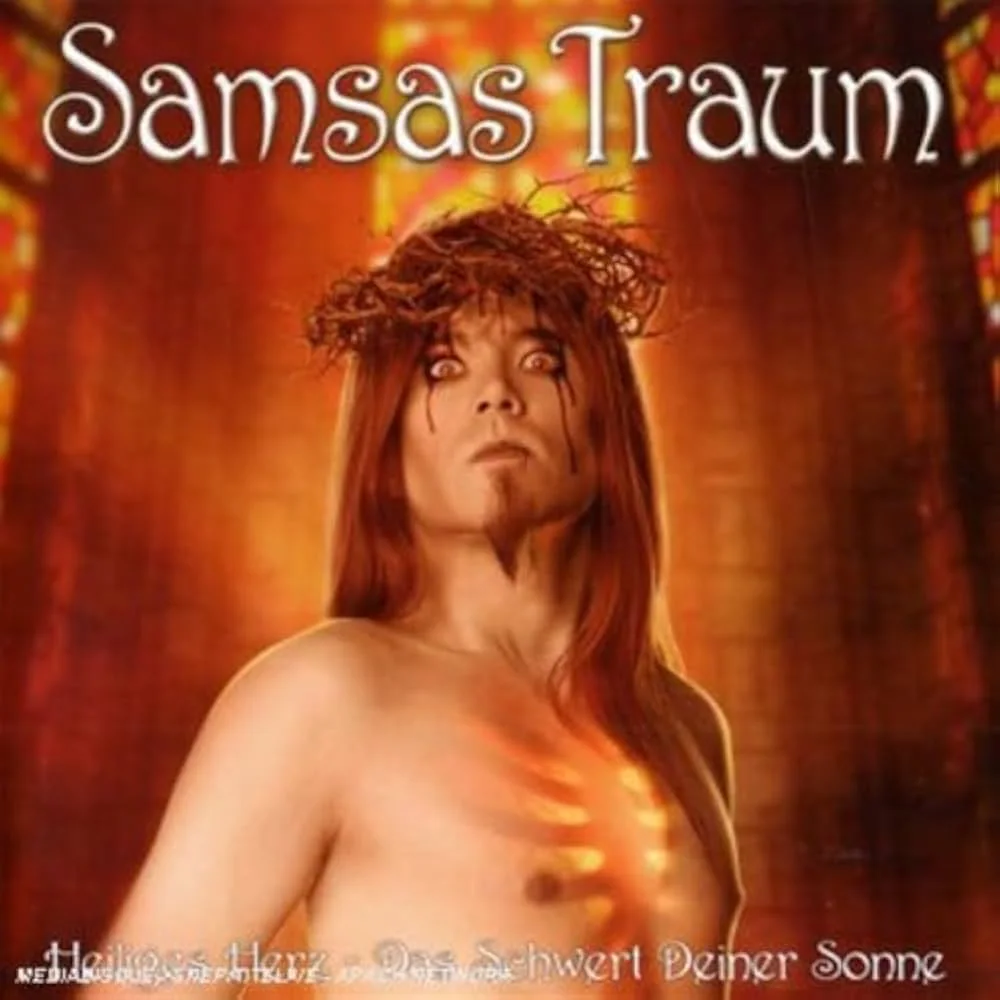
Heiliges Herz - Das Schwert deiner Sonne
A huge, melodic collision of black, gothic and symphonic metal whose theatrical excess and extreme dynamics cohere into something unmistakably its own.