
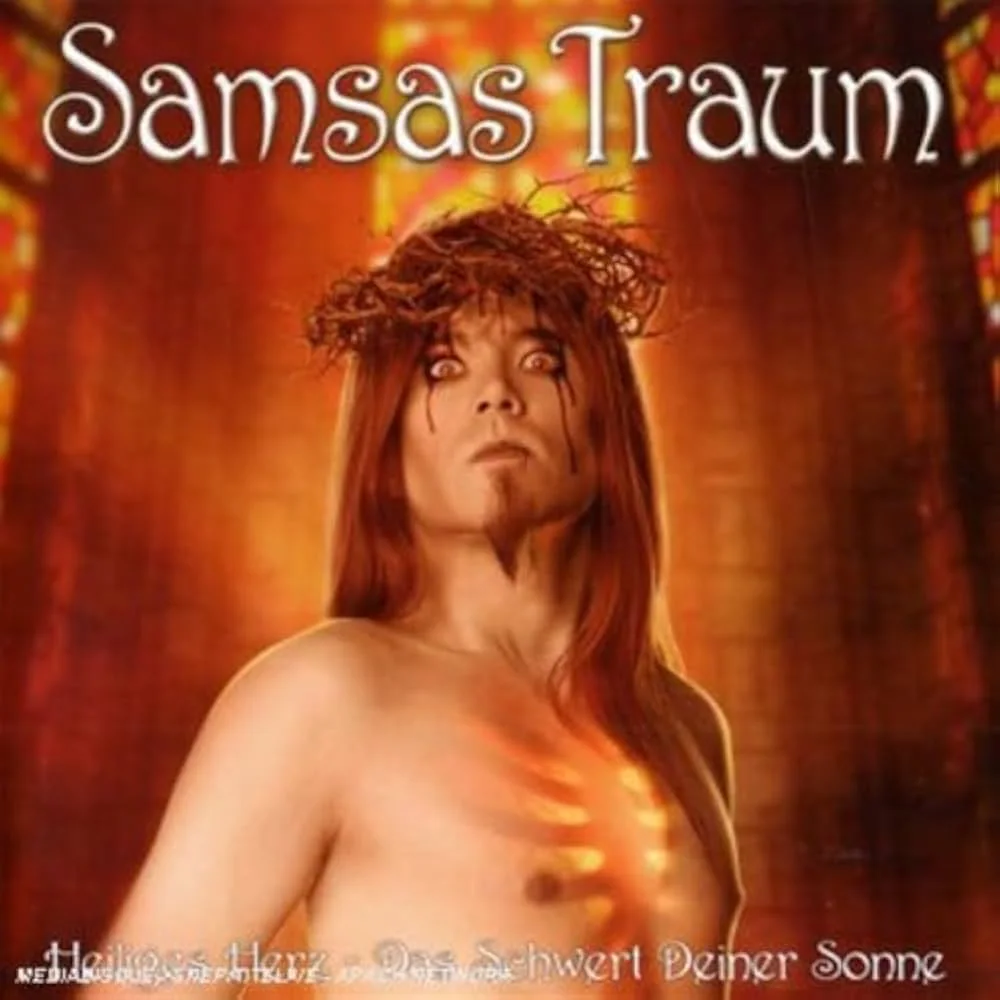
Heiliges Herz - Das Schwert deiner Sonne
Runagaldr score

A huge, melodic collision of black, gothic and symphonic metal whose theatrical excess and extreme dynamics cohere into something unmistakably its own.
5 + 6 = 218. That math ain’t mathing. As an opening statement, though, it is almost perfect for Heiliges Herz - Das Schwert deiner Sonne. This is an album that looks wrong if you expect familiar rules to stay put. It is black metal, gothic metal, symphonic metal and dark metal, sometimes all within a few minutes, yet I have never heard that variety as confusion. The variety is the identity. This is not a record failing to fit into a genre. It is a record succeeding at being itself.
What surprised me on this listen was just how much straight black-metal vocabulary is actually here. Tremolo-picked riffs, blast beats, double kick and genuinely hostile screams are everywhere. It simply does not feel as abrasive as black metal often does because the production is so damn good. The guitars are massive and clear, the drums are punchy without turning into mush, and the strings and synths have room to breathe. Even when the music is at full speed, melody never disappears. The recurring high, almost whistling synth tone is pure Samsas Traum to my ears, while harmonized lead guitars and proper solos regularly pull the music toward classic heavy metal without sounding out of place.
The vocals are just as varied. Alexander Kaschte’s clean singing can sound vulnerable, theatrical and exposed, while his usual screams are pure venom. He whispers, shouts, talk-sings and changes his attack constantly, yet it always sounds unmistakably like him. I also love that the production leaves some of the physical performance intact. You can hear breaths. Singers do, in fact, require oxygen. By the finale he pushes into a nearly hysterical scream that sounds more extreme than anything else on the record, while still moving back through cleans, shouts and his more familiar harsh voice. From a vocal perspective, “Das Schwert deiner Sonne” is basically everything the album can do, and then some.
“Das Zeitalter der Bäume” establishes the scale immediately. After the short intro, the album goes straight into blast beats, huge guitars, clean vocals and those poisonous screams. At more than eight minutes it could easily feel bloated, but I would not cut a second. The slower passages are enormous and melodic, then the song accelerates again without losing its hooks. It is also a perfect introduction to the album’s lyrical extremes: humanity is put on trial as a species and nature is imagined continuing after us. The music matches that contempt and scale remarkably well.
Then somehow the same album makes room for “Liebeslied”. Against all odds, the song called “Love Song” is actually a love song. Clean guitars and harmonics finally give the record a little breathing room, but the double bass never lets it become lightweight. There is a black-metal-style tremolo riff, a beautiful acoustic guitar solo, huge strings and one of the catchiest choruses on the album. That combination is the entire record in miniature. Samsas Traum can borrow a technique from black metal without allowing that technique to dictate what the song is supposed to feel like.
“Heiliges Herz” is one of the album’s absolute peaks for me. It is mid-tempo, almost poppy in how immediate the melody is, but the arrangement is far too strange and grand to feel like pop. The strings are enormous, Diana Lueger’s voice adds a beautiful contrast to Kaschte, the bridge is fantastic, and the twin lead guitars push it even higher. I have always loved the lyrics too. Some of Kaschte’s writing can make me feel like I speak German but apparently do not speak Alex, yet this one gets through more directly. The idea that another person’s touch can make the narrator feel untouchable has always stuck with me. The only real problem with “Heiliges Herz” is that it eventually has to end.
The lyrics across the album are much broader than the black-metal surface might suggest. Nature, animal rights, humanity’s destructiveness, love, fear, death and personal transformation keep circling back. Nature is often treated as something sacred, while humanity is very much not assumed to be the center of creation. The funniest part is how naturally extinction-level ecological misanthropy can sit next to sincere romantic writing without making the album feel incoherent. Some of the metaphors are dense enough that I still would not pretend to have every song completely decoded, but difficulty is not the same thing as nonsense. There are genuinely beautiful choices of words throughout this record.
I can also understand why somebody would hate all of this. Black-metal purists may find it too polished, melodic, theatrical and stylistically promiscuous. Someone who wants a consistent, easy genre box may find the constant changes exhausting. Even Samsas Traum listeners expecting something closer to a.Ura und das Schnecken.Haus are not necessarily getting what they came for. If you see “black metal” and expect Marduk, you have walked through the wrong door. For me, though, the things most likely to repel another listener are exactly the things that give this album its personality.
That personality is not just Kaschte, either. He is obviously the center of Samsas Traum and his presence is impossible to miss, but the record would not work without the musicians around him. The layered guitar arrangements, recurring twin leads, melodic counter-lines, solos, relentless drumming and synth work are too important to reduce the album to one eccentric frontman with backing musicians. I saw Samsas Traum live once in Leipzig many years ago, and it remains one of the more memorable concerts I have attended. They could carry this intensity and theatricality onto a stage. It was not merely studio construction.
Then there is “Das Schwert deiner Sonne”. Seven minutes of blast beats, straight black-metal riffing, the trademark whistle synth, twin guitars, a stompy section with a frankly questionable guitar sound, cleans, shouts, familiar screams and that completely unhinged hysterical voice. At some point I stop knowing how to describe it beyond “weird but awesome”. It keeps adding ideas and somehow refuses to collapse under them. Then it just ends. No grand comedown. Suddenly there is silence and the only sensible thought is: what the fuck did I just listen to?
I used to solve that feeling by immediately replaying “Liebeslied” and “Heiliges Herz”. Personally, I still think “Heiliges Herz” would have made the stronger final track because it feels more emotionally conclusive. “Das Schwert deiner Sonne” is the stranger and more audacious ending, though, and there is something appropriate about this album refusing to leave quietly or neatly.
I have known Heiliges Herz - Das Schwert deiner Sonne for well over a decade, and none of this is novelty anymore. It still feels huge. It still pulls me out of ordinary life for an hour. I would not remove a song, I would not change the production, and the qualities I can imagine other listeners calling excessive or embarrassing are the same qualities I would miss if they were gone. A 10 is not a claim that every person should consider a record universally flawless. On this scale, it means masterpiece and personal classic.
This album is so fucking good.